
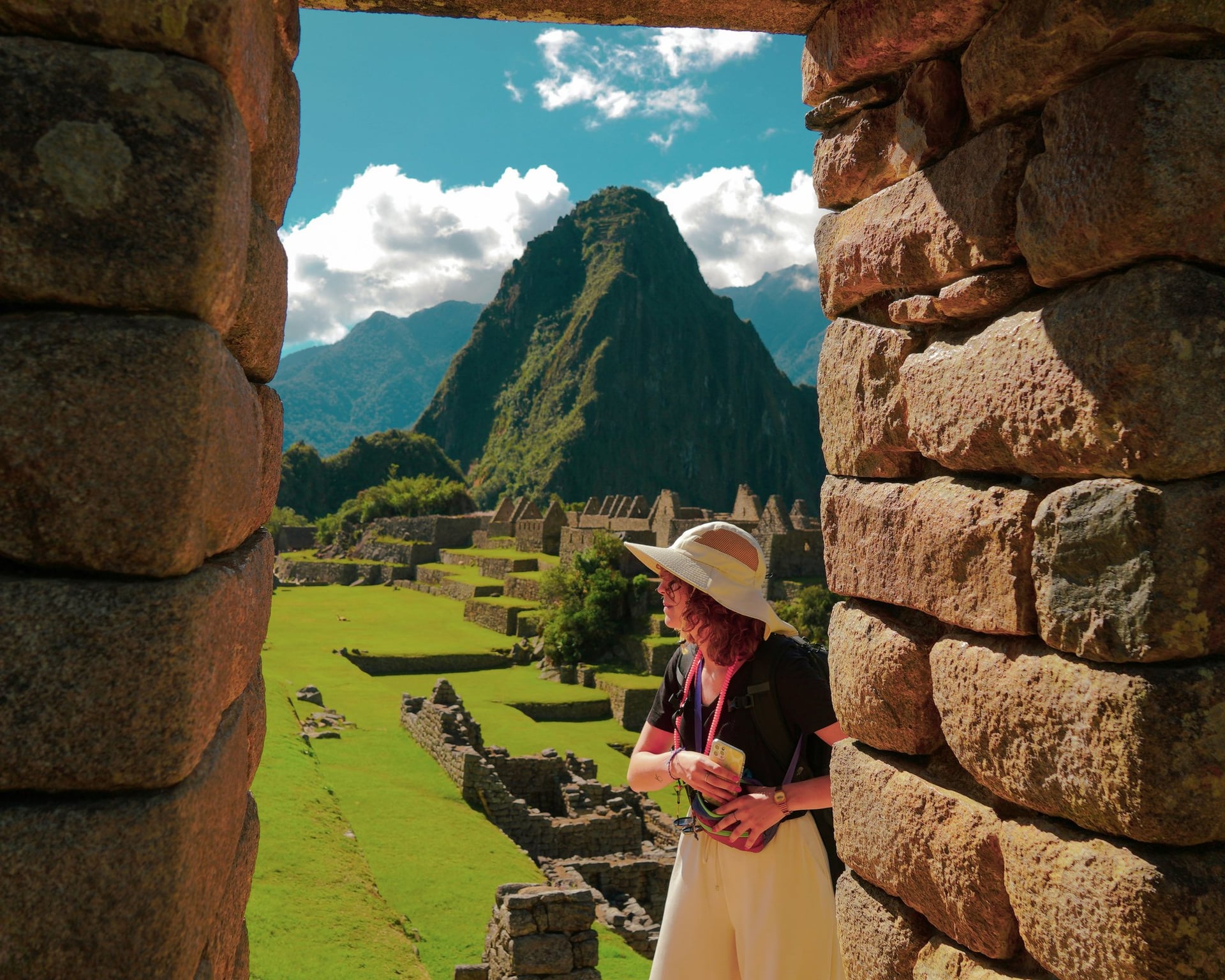
How the Inca Trail permits work, when they sell out, what each day of the route looks like, how hard the trek really is, and the best months to go!
The Inca Trail is a stone path built by the Incas over 500 years ago to reach Machu Picchu—it is the only trail that reaches the citadel on foot through the Sun Gate. The classic route covers about 42 to 45 km (26 to 28 mi) over four or five days, climbs to an altitude of 4,228 m (13,871 ft) at Dead Woman’s Pass, and leads past a dozen archaeological sites that can only be reached by hiking.
This is also one of the most regulated treks in the world. Peru’s Ministry of Culture allows 500 people a day on the trail, including guides, porters, and cooks, which means only about 200 places go to hikers.

Want to know how to get one of them and what the days of hiking are like? PlanetaEXO, an ecotourism platform specializing in Peru trekking tours, has put together this guide to help you plan the trek from the permit to the last step at Machu Picchu. Check it out below!
What is the Inca Trail?
The Inca Trail is one section of the Qhapaq Ñan, the road network that connected the Inca Empire across the Andes. The stretch that ends at Machu Picchu runs from the Urubamba River near Ollantaytambo, at Km 82, over two high passes and down into the cloud forest above the citadel.
There are two main versions:
- Classic Inca Trail: about 42 to 45 km, 4 or 5 days, 3 nights camping. It starts at Km 82, crosses Dead Woman’s Pass, and enters Machu Picchu through Inti Punku, the Sun Gate.
- Short Inca Trail: about 12 km in one day (often sold as a 2-day trip with a hotel night), from Km 104 past Wiñay Wayna to the Sun Gate. Easier, with no camping and no high pass.
Along the classic route you walk past Llaqtapata, Runkuraqay, Sayacmarca, Phuyupatamarca, and Wiñay Wayna, sites with Inca walls, stairways, and irrigation channels that still carry water. No road reaches them.


How do Inca Trail permits work?
This is the part that decides whether you hike at all. Inca Trail permits follow four rules:
- Only licensed operators can buy them: the Ministry of Culture (through its Cusco office) sells permits only to tour companies authorized for that year. Travelers cannot buy one themselves and are not allowed to hike without a licensed guide.
- 500 daily limit: about 200 places go to trekkers and about 300 to guides, porters, and cooks. The limit is per day, not per company, so once it fills, no operator can get you in.
- Each permit carries your name and passport number: it cannot be transferred, changed to another date, or refunded. Passports are checked at the start of the trail and at the control points along the way, so the name must match exactly.
- Permits for the next year go on sale in October or November: Peru’s Ministry of Culture announces the exact dates each year, often releasing them month by month. Some operators take deposits earlier, but no place is confirmed until the permit is issued in the official system.
How far in advance should you book?
You need two bookings for the trek: the Inca Trail permit and the Machu Picchu ticket. Each sells out on its own timeline.
For a trek between May and September (dry season), book the permit six to eight months ahead, as some dates sell out within days of release. For March, April, October, and November, three months is usually enough. In December and January, a permit may still be available a few weeks before, but the Machu Picchu ticket may already be sold out.
The Machu Picchu ticket is what usually sets the deadline. To give yourself the best chance at Circuit 2—the most comprehensive and sought-after route—book as early as possible, ideally up to a year ahead, especially for the dry season. By the two- or three-month mark, Circuit 2 is typically sold out, and you will likely be directed to Circuit 3 instead.
With fewer than 60 days to go, even entry to the citadel becomes uncertain, so a last-minute trip may find a permit but no ticket. If you book that late, ask your operator to confirm the ticket before you pay a deposit.
If you renew your passport after booking, tell your operator; the permit can be updated, and you should carry both the old and the new passport on the trek.
The permit is not your Machu Picchu ticket
Since 2026, the Inca Trail permit and the Machu Picchu entrance ticket are managed separately. A permit does not guarantee entry to the citadel, so check that your trek includes both.
Machu Picchu tickets are also nominal now. Since September 2026, the official Tu Boleto site gives buyers 15 minutes to pay, with the ticket being issued in the visitor’s name with a fixed date, entry hour, and route.
Entries are capped per day, and each circuit sells out on its own—once it is gone, no operator can get more for that date. Tickets are non-refundable, and the name cannot be changed after purchase (only the passport number can be updated). Some tickets are sold in person in Machu Picchu Village, but counting on them usually means waiting extra days in town.
👉 Explore the adventure: Inca Trail to Machu Picchu: Premium 5-Day Trek (permit and Machu Picchu ticket included)
The route day by day
Campsites on the classic Inca Trail are assigned by the park authorities, so each company’s daily stages differ a little. This is the route as our 5-day trek walks it, with distances and times from the itinerary:
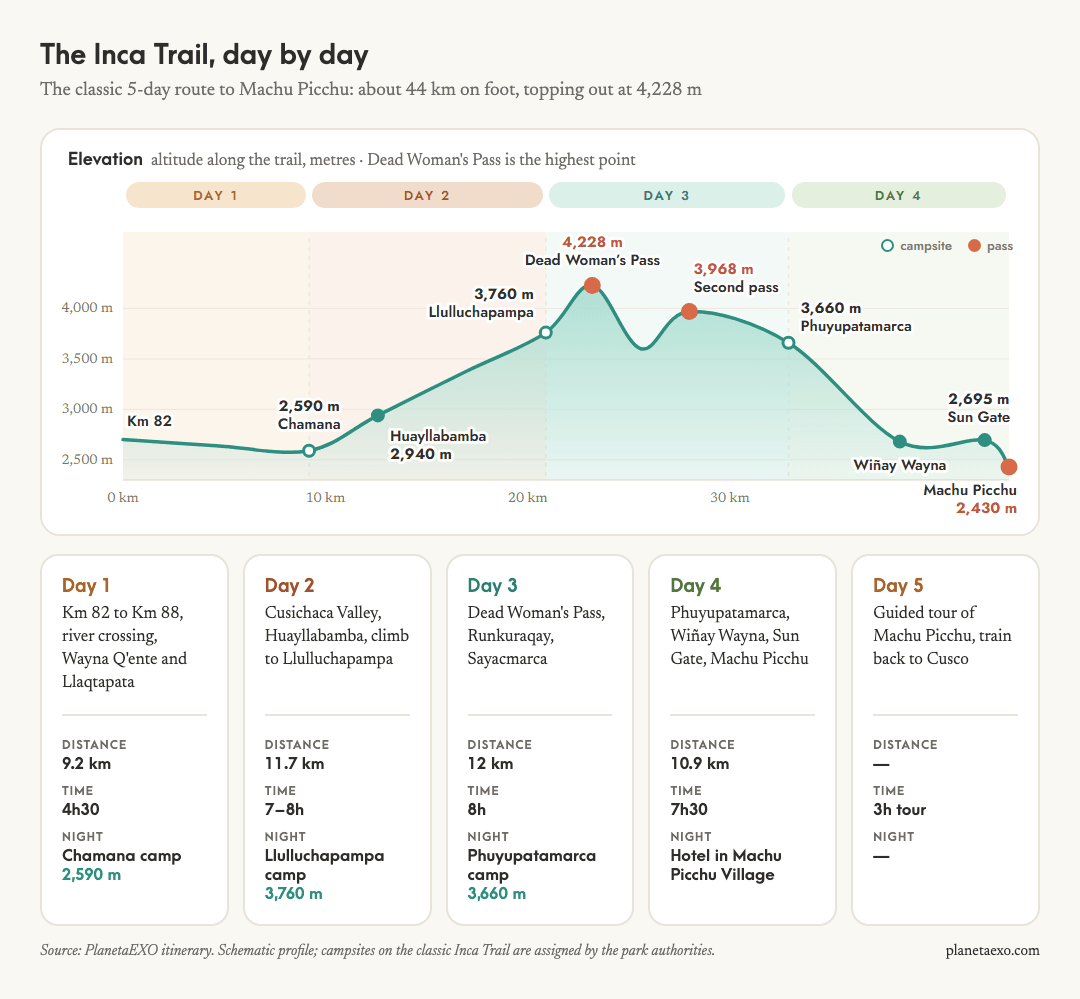
- Day 1: warm-up along the Urubamba River, mostly flat, with the first Inca sites in the late afternoon.
- Day 2: climbs the Cusichaca Valley to Huayllabamba (2,940 m) and on through native forest to the last camp below the pass. It is the biggest altitude gain of the trek, about 1,170 m in one day.
- Day 3: crosses Dead Woman’s Pass (Warmiwañusca). From the top at 4,228 m, the trail drops to the Pacaymayo River, climbs again past Runkuraqay to a second pass at 3,968 m, then follows the original Inca paving into the cloud forest.
- Day 4: starts with sunrise above Phuyupatamarca and drops steeply to Wiñay Wayna. The last two hours lead through the forest to the Sun Gate, at 2,695 m, and your first view of the citadel.
- Day 5: the guided visit to Machu Picchu, followed by the train and transfer back to Cusco.


Inca Trail map
The trail itself is covered in the elevation profile above: from Km 82 over Dead Woman’s Pass and the second pass, past the three campsites, to the Sun Gate. The map below picks up where the trek ends.
Inside Machu Picchu, the Ministry of Culture splits the visit into 3 circuits and 10 official routes, each marked in its own color—the ticket you hold sets which one your guided tour follows.
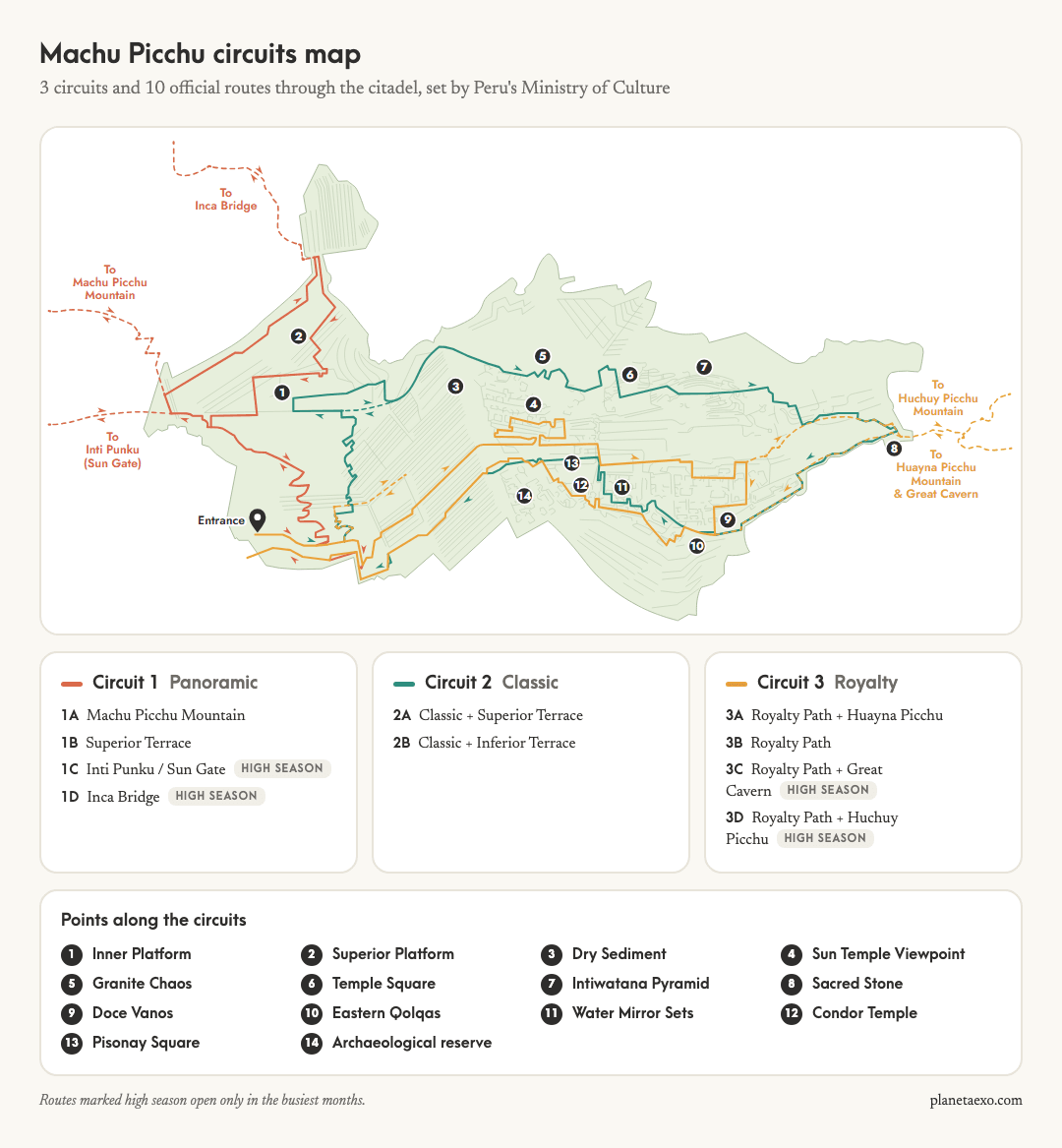
Machu Picchu circuits: which one do you visit after the trek?
Inside the citadel, hikers follow one fixed route, with no doubling back and no re-entry. Guards can take visitors off the site for leaving their route.
The entry is by hourly slot from 6 AM to 3 PM. You have a tolerance of 30 minutes in regular months and 45 minutes in the busiest period (June 1 to October 15, plus December 30 and 31). The mountain checkpoints of Machu Picchu, Huayna Picchu, and Huchuy Picchu have no tolerance at all.
The Machu Picchu circuits below are set by the Ministry of Culture.
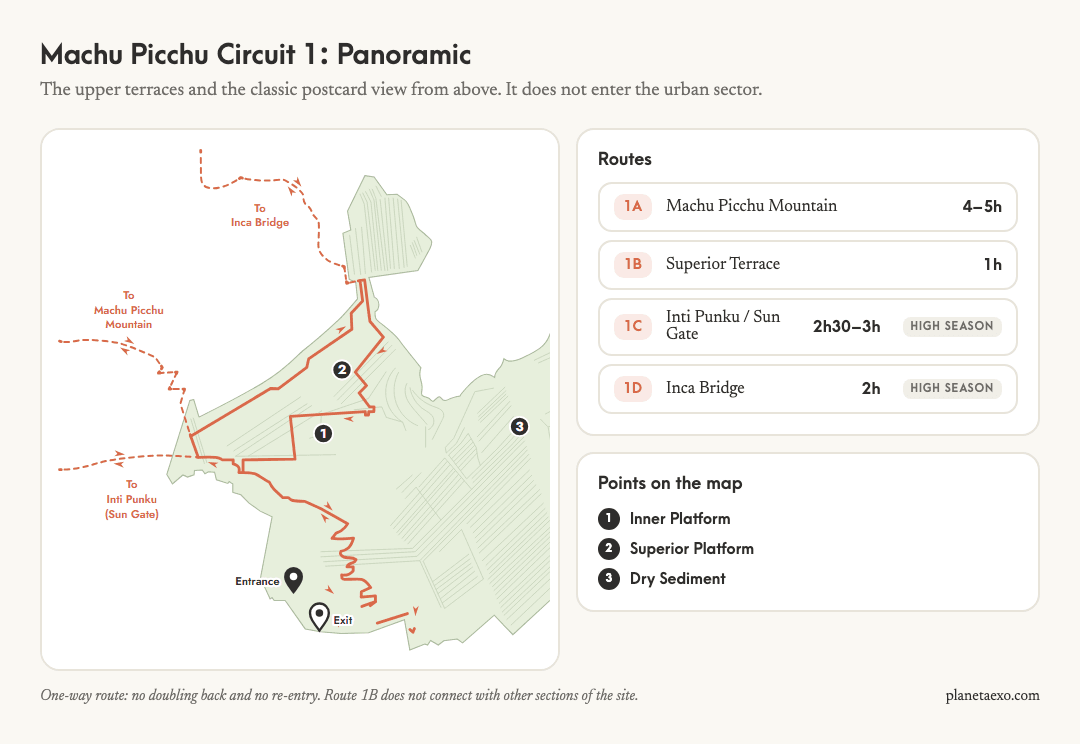
Circuit 1 (Panoramic)
The upper terraces and the classic postcard view from above. It does not enter the urban sector. On Route 1B, you reach the viewpoint, take your photos, and exit—there is no walk through the citadel.
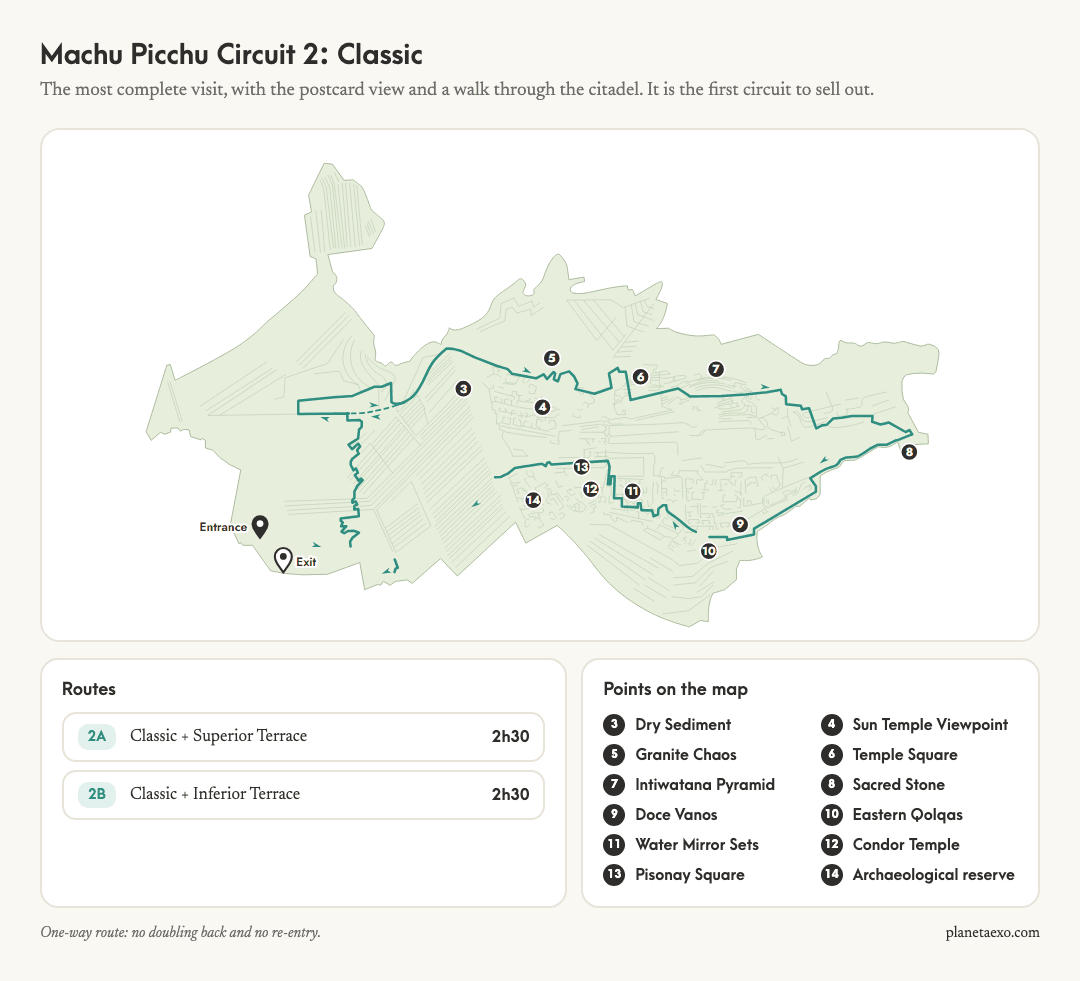
Circuit 2 (Classic)
The most complete visit, with the postcard view and a walk through the citadel. This is the first choice for the guided tour after the trek—and the first to sell out.
Circuit 3 (Royalty)
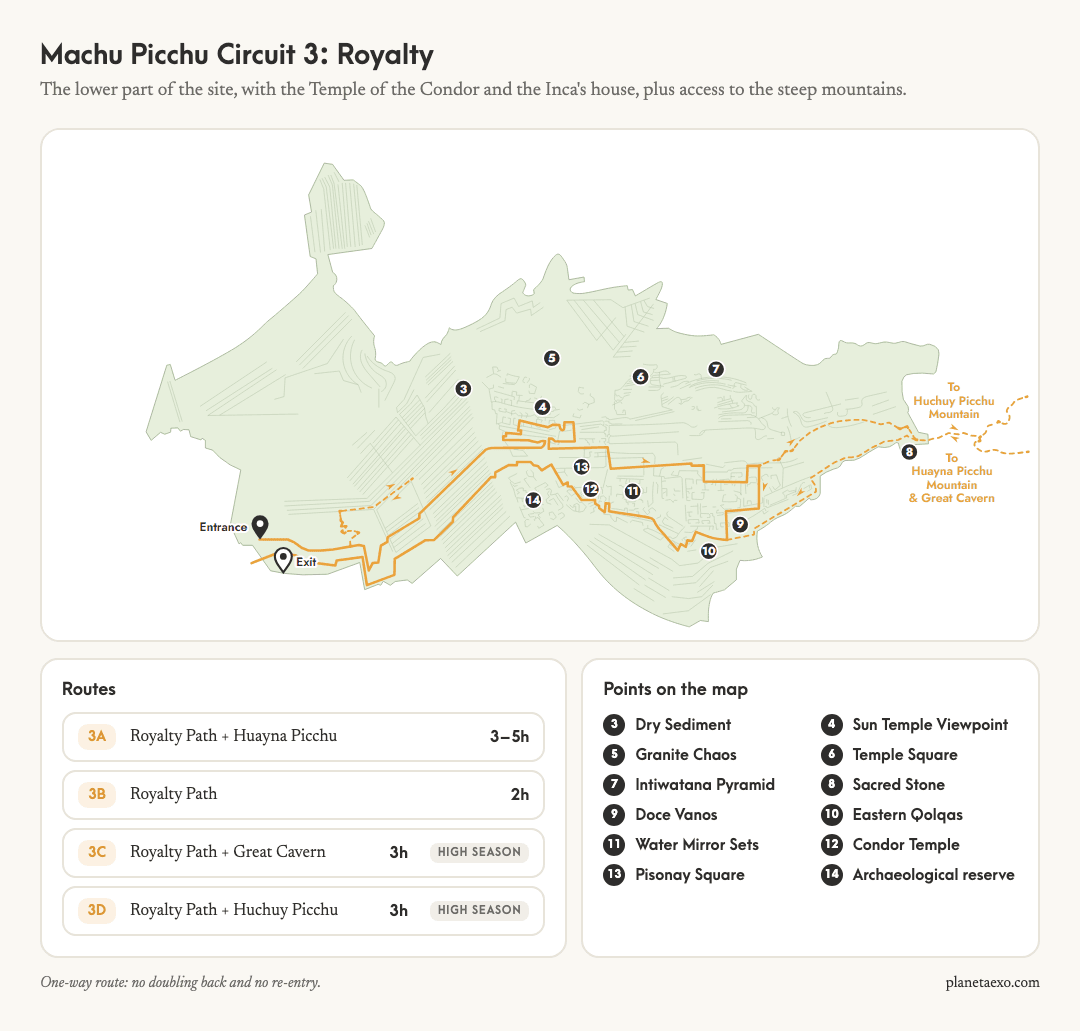
The lower part of the site, with the Temple of the Condor and the Inca’s house. Depending on the ticket, it can add a climb up Huayna Picchu (Route 3A) or, in high season only, the Great Cavern or Huchuy Picchu. Route 3B is the least demanding and still covers most of the city; what you miss compared with Circuit 2 is the view from the upper terraces.
Can you choose your Machu Picchu circuit?
Not quite. No operator can guarantee Circuit 2; travelers visit Machu Picchu on the circuit that still has tickets for their travel dates. When buying tickets, operators follow this order:
- Circuit 2 (Classic): first choice; Route 2A, then Route 2B.
- Circuit 3 (Royalty): second choice when Circuit 2 is sold out, usually Route 3B.
- Circuit 1 (Panoramic): last resort, usually Route 1B.
Booking early improves the chances of getting Circuit 2, but it never locks it in. Your operator tells you the circuit and entry time as soon as the ticket is issued. If people in the same group end up on different circuits, guides try to keep everyone together; if that is not possible, the group splits between guides.


How hard is the Inca Trail?
The Inca Trail is rated moderate to challenging. No section is technical or exposed, but three things make it hard:
- Altitude: most of the trek sits between 2,600 and 4,200 m. Hikers report tingling fingers, headaches, and shortness of breath on the climb to the pass. Guides carry oxygen.
- Stone steps: much of the trail is the Inca stairway, up and down. Some stretches have hundreds of steps in a row, and the descents are hard on the knees. Trekking poles help a lot.
- Early starts: most days begin around 5 AM; walking times run from 4h30 to 8 hours.
Crossing Dead Woman’s Pass is widely considered the toughest section of the entire trek. On our 5-day route, this falls on Day 3—an 8-hour push over two mountain passes and down ancient Inca stairways. Day 4 is also long, but the trail is nearly all downhill from Phuyupatamarca.

How to prepare for the Inca Trail
Plan to arrive in Cusco (3,350 m) a minimum of two days prior to your trek—or three if traveling from sea level—and keep your initial day light. Prepare over a few months by practicing on stairs, tackling uphill walks, and going on hikes while carrying a daypack.
Since porters haul the group’s camping gear along with a duffel for your personal belongings (up to 8 kg on our trip), you will only need to carry your daypack during the hike.
What hikers wish they had known
Hikers who venture on the classic 4-day trek often report the same common challenges:
- The 3 AM queue: on the last morning, groups line up at the final checkpoint from 3 or 4 AM. As soon as it opens at 5:30 AM, everyone rushes to the Sun Gate to be first.
- Fog at the Sun Gate: on the morning of the last day, many hikers reach Inti Punku, the Sun Gate, inside a cloud. It usually lifts between 8 and 9 AM.
- The pace: large groups often split into fast and slow hikers; guides push to keep the schedule.
- Bathrooms: public toilets along the trail are basic and few.
That is why our 5-day trek uses shorter stages and quieter campsites (Chamana, Llulluchapampa, Phuyupatamarca) with a private eco-toilet. You reach the Sun Gate on Day 4 without crowds, sleep in Machu Picchu Village, and enjoy a rested Citadel tour on Day 5, giving you a backup chance if Day 4 is foggy!

Best time to hike the Inca Trail
The trail is open all year except February, when it closes for maintenance; Machu Picchu itself stays open.
- May to September (dry season): clear skies, firm trails, and the coldest nights, with frost possible at the high camps (down to about −2°C / 28°F). This is the best time to hike the Inca Trail for views and the hardest time to get a permit.
- March, April, October, and November: shoulder months, with some rain, greener valleys, and fewer hikers. Permits are easier to find.
- December and January: the wettest open months, with slippery stone and more fog. Fewer people, but bring good rain gear.
Please note: days on the trail can reach 17°C (63°F), so dress in layers whatever month you choose.

How long is the Inca Trail and how much does it cost?
The classic route is about 42 to 45 km, depending on where the itinerary starts and ends, walked in four days (3 nights camping) or five days (3 nights camping and 1 night in a hotel). The Short Inca Trail is about 12 km in one day.
Prices depend on group size and service level. Guided classic treks with the permit included range from around US$ 600 to over US$ 2,000 per person. When you compare, check whether the price includes:
- the Machu Picchu entrance ticket (sold separately since 2026) and the guided tour;
- the train back from Machu Picchu Village and the bus to the citadel;
- a porter for your personal gear, a sleeping bag, and trekking poles;
- a hotel night in Machu Picchu Village.
Tips for porters, cooks, and guides are not included in most packages. Very low prices often mean lower pay for porters or missing insurance.


What if Inca Trail permits are sold out?
If Classic Inca Trail permits are sold out, you can still trek to Machu Picchu. For a 5-day journey through Andean valleys, the Ancascocha trek with the Short Inca Trail—which has its own, separate permit quota—spans ~46 km, ascends a 4,500 m pass overlooking the Huayanay Glacier, and finishes via Km 104, Wiñay Wayna, and the Sun Gate.
Alternatively, the Salkantay trek travels past Salkantay Mountain without any permit caps.

👉 Read more: How to Hike the Salkantay Trail to Machu Picchu in Peru – Travel Guide
Hiking the Inca Trail with PlanetaEXO
With all the information about the Inca Trail in hand (how permits work, circuits, and the full route), the next step is to choose your dates and book your trip!

PlanetaEXO is an ecotourism platform specializing in Cusco tours. We work with local operators with decades of experience and take care of all the logistics so all you have to do is enjoy the hike. Contact us now!
Keep reading
November 7, 2026
How to Hike the Salkantay Trail to Machu Picchu in Peru – Travel Guide
Plan your Salkantay Trail hike to Machu Picchu in Peru, with the route, Humantay Lake, high pass, best season, days, where to sleep, and Salkantay vs Inca Trail!
November 4, 2026
10 Facts About Salkantay Mountain, the Sacred Peak on the Way to Machu Picchu
A sacred Andean apu, South America’s only bear, breathtaking glaciers, and a hidden view of Machu Picchu. Learn 10 facts about Salkantay Mountain!
November 10, 2026
Two Ways to Explore the Brazilian Amazon: Akepong’s Lodge and River Cruise Adventure
A traveler from Thailand stayed at Mirante do Gavião, then spent five days on a Rio Negro cruise. Read Akepong’s Amazon story in his own words.