
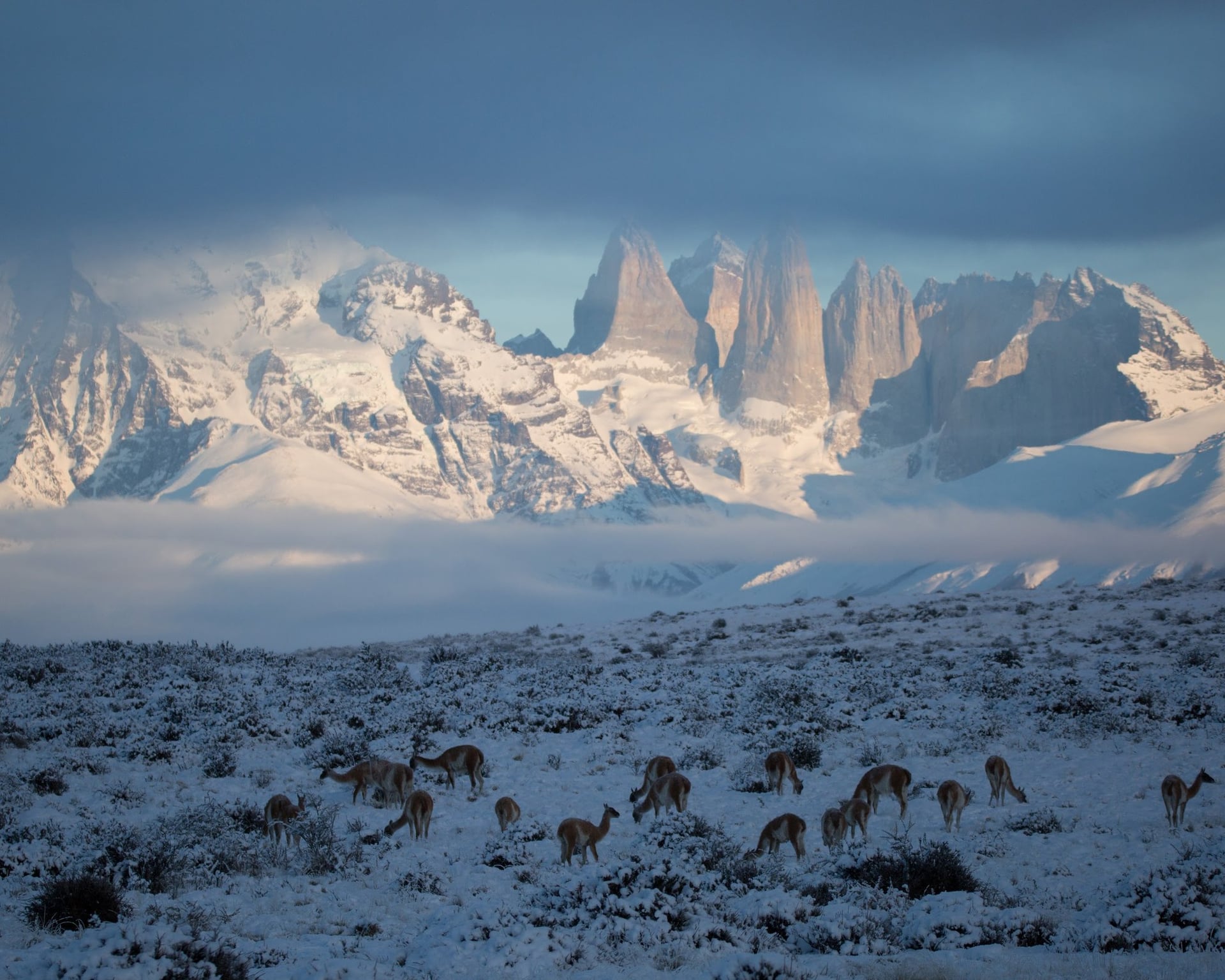
What is the best time to visit Patagonia if Chile’s Torres del Paine is your goal? Here is the national park month by month, with its daylight, temperatures, rain, and official rules!
Torres del Paine National Park is located at approximately 51° south, in the Magallanes region of Chilean Patagonia, two hours from Puerto Natales. At this latitude, there is significant variation, with days ranging from about 8 to 16 hours of sunlight. Wind, snow on the mountains, and the park’s own regulations also create differences between the months.
That’s why the best time to visit Patagonia depends on what you’re looking for. Some circuits operate only in the summer, while others require the support of guides during the winter. Want to know which months are best for your trip?
PlanetaEXO, an ecotourism platform specializing in Patagonia tours, has put together this guide to help you with your vocational planning. Check it out below!

The short answer: the best time to visit Torres del Paine
There is no single best month to visit Patagonia. Each season trades one thing for another:
- December to February (summer): the longest days, more than 16 hours of daylight from December to early January, every trail and refugio open, and the warmest weather. Also the strongest wind, the biggest crowds, and the highest prices.
- March and April (autumn): red and orange forests, less wind and fewer people. Days get shorter fast. April is the wettest month of the year.
- October and November (spring): flowers, quiet trails, and the park reopening for the season. Snow can stay on the high passes until late November.
- May to mid-September (winter): snow, empty trails, and the best puma tracking. A certified guide is required on the W and on the Base Las Torres (Base of the Towers) trail. The O Circuit is closed.
If hiking is the goal, the best time to hike Patagonia’s most famous park is November to March, the only months when the O Circuit usually opens and every refugio on the W operates normally.

Torres del Paine weather by month
Temperatures and rain below are the 1991–2020 averages of the Torres del Paine weather station of Chile’s water authority, Dirección General de Aguas (DGA), inside the park near the administration area. Sunrise, sunset, and daylight are calculated for Puerto Natales on the 15th of each month.

At 25 m elevation, the station’s data understates conditions at Base of the Towers (near 900 m), which is colder and windier. Annual rainfall also varies, from 350 mm at Lago Sarmiento to 1,130 mm at Lago Dickson.
Summer: December to February, long days and strong wind
December
Patagonia in December brings the longest daylight hours of the year. Near the solstice on the 21st, sunrise occurs around 5:30 AM, with sunset following after 10 PM in Puerto Natales. Temperatures range from average highs of 16 °C (60 °F) to lows near 7 °C (45 °F).

As the peak tourist season begins, campsites and refugios sell out quickly, and reservations for the Lago Pehoé catamaran become difficult to secure. Holiday surcharges apply to multiple itineraries during the Christmas and New Year period.
During the 2025–26 season, hikers on the Base Las Torres trail were required to leave the Laguna Amarga ranger station by 10 AM at the latest between December and February, with the lookout shutting to visitors at 4 PM.

January
With average high temperatures reaching around 17 °C (62 °F) and nighttime lows remaining near 8 °C (47 °F), January and February stand out as the warmest months of the year. Visitors in mid-January can also take advantage of roughly 16 hours of daily daylight.
However, January marks the peak of visitor activity and brings some of the strongest winds, with recorded wind gusts of up to 150 km/h. Due to the heavier trail traffic, pumas typically retreat to quieter areas of the national park, making summer not exactly the best time for wildlife tracking.
February
February remains peak summer, offering the highest average high temperatures of the year (17.1 °C / 63 °F) alongside fully accessible trails. However, daylight decreases noticeably throughout the month, dropping from roughly 15 hours and 15 minutes on February 1 to 14 hours and 22 minutes by the middle of the month.
If you also want to see penguins, the colony on Magdalena Island is there only from November to March.
Autumn: March and April, color and calmer air
March
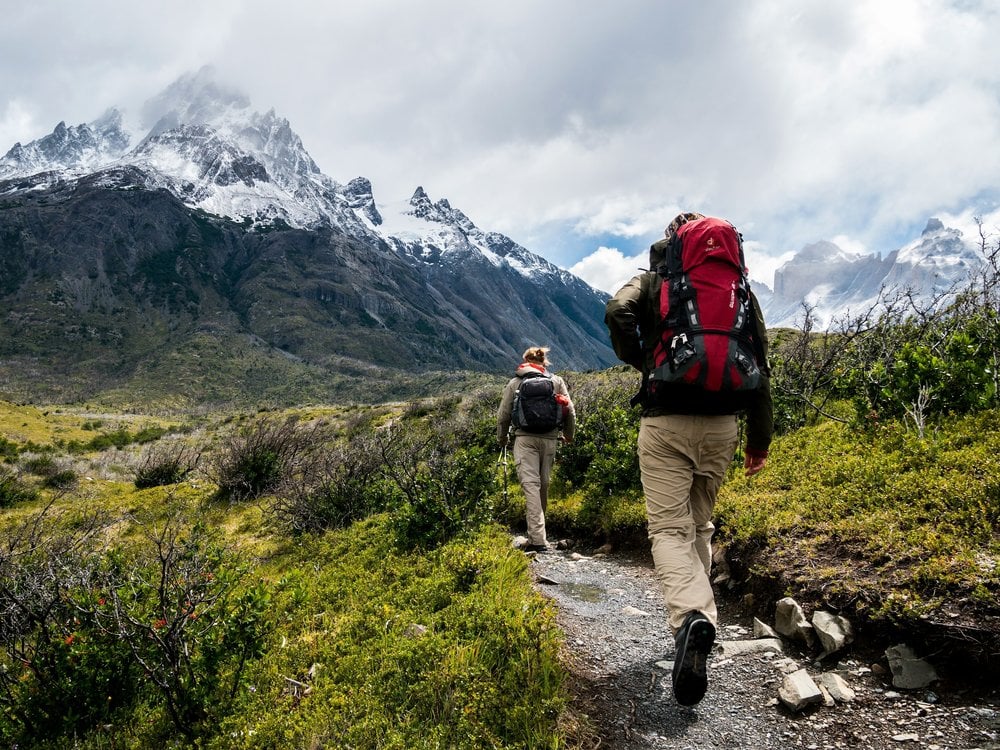
As autumn begins, Patagonia in March sees winds taper off toward the end of the month. The lenga and ñirre foliage transitions to vibrant shades of red and orange, while stiller lake waters offer ideal conditions for capturing crisp mountain reflections.
Temperatures cool to average highs of 15 °C (59 °F), mid-month daylight shrinks to 12 hours and 31 minutes, with rainfall increasing to roughly 79 mm.
Key operational shifts also take effect: the O Circuit shuts down at month’s end, while the Base Las Torres trail transitions to shoulder-season access times, requiring a latest departure of 09:30 AM and closing the viewpoint by 3 PM.

April
With rainfall peaking at approximately 89 mm, April stands out as the wettest month of the year. It is also the coolest of the trekking season, featuring daytime highs of around 12 °C (54 °F) and overnight lows near 4 °C (39 °F). On the other hand, trekkers are rewarded with vibrant autumn colors, uncrowded trails, and greater lodging availability.
April is also the month when Torres del Paine National Park begins to close. In general, campsites and the Welcome Center cease operations during the last week of the month. The requirement to be accompanied by a guide also comes into effect during this period.


Torres del Paine in winter: May to mid-September
Winter operations run from late April through mid-September. During this season, most campsites and refugios close, the O Circuit remains inaccessible, and hikers must be accompanied by a certified guide on both the Base Las Torres trail and the W Trek.
In return, travelers experience peaceful, uncrowded trails, snow-capped peaks, and great conditions for puma tracking.

May
May brings maximum temperatures of around 8.5°C (47°F), nights that average slightly above freezing, frequent frosts, and misty mornings. By the middle of the month, daylight hours drop to less than 9 hours.
Some hotels and itineraries cease operations, while others shift to offering special winter programs.

June
June marks the peak of winter’s darkness. During the solstice on the 21st, daylight lasts just 7 hours and 47 minutes, with the sun rising near 10 AM and setting by 5:45 PM. A major benefit of these shorter days is reaching sunrise viewpoints without needing an early pre-dawn departure.
Temperatures remain low, with average highs of 6 °C (42 °F) and overnight lows around −1 °C (30 °F), accompanied by generally calm winds. Depending on weather conditions, some trails may be closed.


July
July is just as cold as June, with highs around 6 °C (43 °F and lows around −1 °C (30 °F) at the national park station. Although temperatures can drop as low as −15 °C, snow depth rarely exceeds 30 cm.
This is the best time to visit Patagonia if you want to see pumas. Drawn by the guanacos that come down to the valleys, pumas roam across the snow-covered ground, leaving behind tracks that make them easier to follow. Bring your camera!
August
Around August 20, daylight extends past 10 hours as days rapidly lengthen. Some trails are reopening, but the requirement to be accompanied by a guide remains in place. Meanwhile, daily high temperatures rise back to roughly 8 °C (46 °F).

September
September marks the transition to spring. Around the middle of the month, CONAF (Chile’s National Forest Corporation) typically lifts the requirement for a guide on hiking trails—such as the W trek and the Base Las Torres trail—though the use of crampons and trekking poles remains mandatory or highly recommended. The Welcome Center and campsites also reopen.
With approximately 46 mm of rainfall, September is the driest time of the year, with maximum temperatures reaching 10 °C (50 °F). As winter draws to a close, it remains a good time for spotting pumas.


Spring: October and November, flowers and a park reopening
October
October is when Torres del Paine National Park reopens for trekking. The refugios typically open at the beginning of the month, as do certain activities such as ice hiking, kayaking, and boat tours to Grey Glacier.


The flowering season also begins this month, with days offering up to 13 hours and 40 minutes of daylight. Temperature highs reach around 13°C (55°F), though late frosts remain common, and precipitation returns to approximately 65 mm.

November
November marks the start of spring’s peak, offering around 15 hours and 34 minutes of daylight by mid-month and comfortable daily highs near 14 °C (58 °F).
Wildlife is remarkably active—guanacos begin their mating season, migratory birds return, and pumas are far easier to spot than in the busy summer months. Meanwhile, blooming flowers and vibrant red shrubs brighten the landscape, while trails remain relatively peaceful.
The O Circuit and other attractions in Torres del Paine—such as Dickson, Los Perros, and John Gardner Pass—generally reopen during this period, though the exact timing may vary depending on weather conditions. Before booking your trip, check the official CONAF channels and local tour operators.
Wind: the one constant in Torres del Paine weather
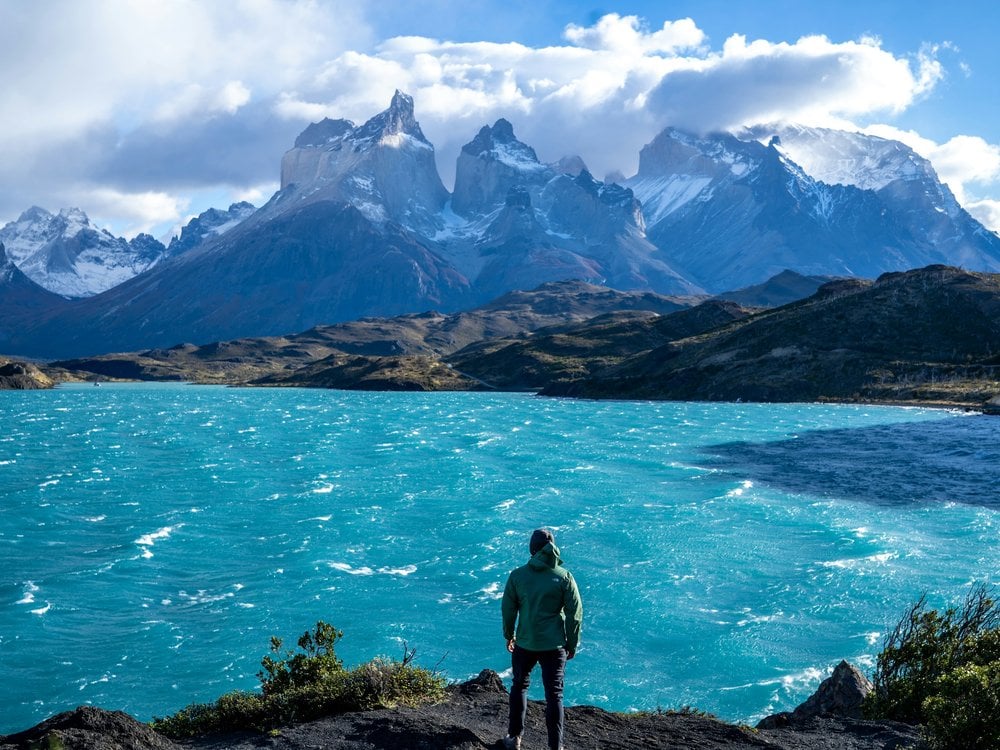
Wind is a constant presence throughout the year in Patagonia. Gusts reach their peak intensity from November through February, dropping significantly during the winter months. It also follows a daily cycle, typically remaining calmest in the morning before peaking between 2 PM and 6 PM—a key factor behind the park’s early cutoff schedules.
Conditions can change quickly over the course of a single day, often shifting from clear, calm mornings to sudden afternoon storms. Park rangers evaluate trail safety daily, temporarily closing routes in the event of severe wind, heavy snow, or flooding.

The park calendar: what opens and closes, and when
These are the dates that matter most when you choose the best time to visit Patagonia for your plans. Most come from the CONAF newsletter for the 2025–26 season, the latest published:
- O Circuit: usually November to March, counterclockwise only (November 1 to March 31 in 2025–26).
- Winter guide rule: a certified guide is required on the W and the Base Las Torres trail from late April to mid-September (in 2026, April 27 to September 16).
- The W in midwinter: closed in June and July 2026, reopened in August with a guide.
- Refugios and campsites: most open from September or October to April. Cuernos and Serón ran from November 1 to March 30 in 2025–26.
- Bookings: without a confirmed refugio or campsite, rangers won’t let you into the mountain area of the W or the O. Day hikes don’t need one.
- Base Las Torres hours: latest start 10 AM, and lookout closed at 16 PM from December to February; 9:30 AM and 3 PM in October, November, March, and April.

Please note: these dates and times may change depending on weather conditions and national park regulations. Consult official CONAF channels or specialized professionals, such as the PlanetaEXO team, for the most up-to-date information!
👉 Read more: 8 Best Torres del Paine Hikes, from Short Viewpoints to the W and O Treks
When is the best time to visit Patagonia for a summer trip?
High demand during the summer months means spots fill up quickly. Bookings for refugios and campsites for the upcoming season typically open between late April and early June. Additionally, tickets for the Lago Pehoé catamaran—which connects the western end of the W Trek—can be difficult to secure during peak summer.
Flight schedules also adjust seasonally, playing a key role in determining the best time to visit Chilean Patagonia overall: while flights into Punta Arenas operate year-round, direct service to Puerto Natales is primarily available in the summer.


Which PlanetaEXO trip fits which month?
The best time to go to Patagonia also depends on the trip. These are the months each of our Torres del Paine trips runs:
| WHEN IT RUNS | TRIP | GOOD TO KNOW |
|---|---|---|
| October to April | Torres del Paine W Trek | Guided, departs every Monday. |
| October to April | Short W Trek | Departs every Sunday. |
| October 1 to April 30 | Self-Guided W Trek | Every night booked. |
| November to March | Guided O Trek and Self-Guided O Circuit | Runs only in the southern summer. |
| September to May | Torres del Paine 4-Day All-Inclusive Tour | Day hikes from a lodge, with the EcoCamp domes as a base. |
| October to April | Patagonia Camp | Yurts by Lake Toro; closed from May to September. |
| September to April | Puma tracking in Torres del Paine | Fixed dates, about one a month, with winter dates on request. |
| All year, including Patagonia in winter | Estancia Cerro Guido | The winter program from May to August adds snowshoe hikes in the Sierra Baguales (no horseback riding in those months). |
Ready to visit Torres del Paine? Plan your trip with PlanetaEXO!
Now that you know what to expect from the weather in Torres del Paine, it’s time to choose the best time for you: long summer days, autumn color, or the quiet of winter.
PlanetaEXO is an ecotourism platform specializing in Patagonia trekking tours. We work with local operators and book the refugios, transfers, and park logistics as one plan in the month that suits you. Contact us now!
Keep reading
November 6, 2026
15 Galapagos Islands Animals and Where to See Them
Discover the most fascinating facts about the animals in Galapagos, from giant tortoises to whale sharks, and where you can spot them during your trip!
November 4, 2026
10 Facts About Salkantay Mountain, the Sacred Peak on the Way to Machu Picchu
A sacred Andean apu, South America’s only bear, breathtaking glaciers, and a hidden view of Machu Picchu. Learn 10 facts about Salkantay Mountain!
November 4, 2026
How Much Does It Cost to Visit the Amazon Rainforest in Brazil?
Understand Amazon tour prices in Brazil for different travel styles. See what’s included and what’s excluded and how to plan a cost-effective trip!