
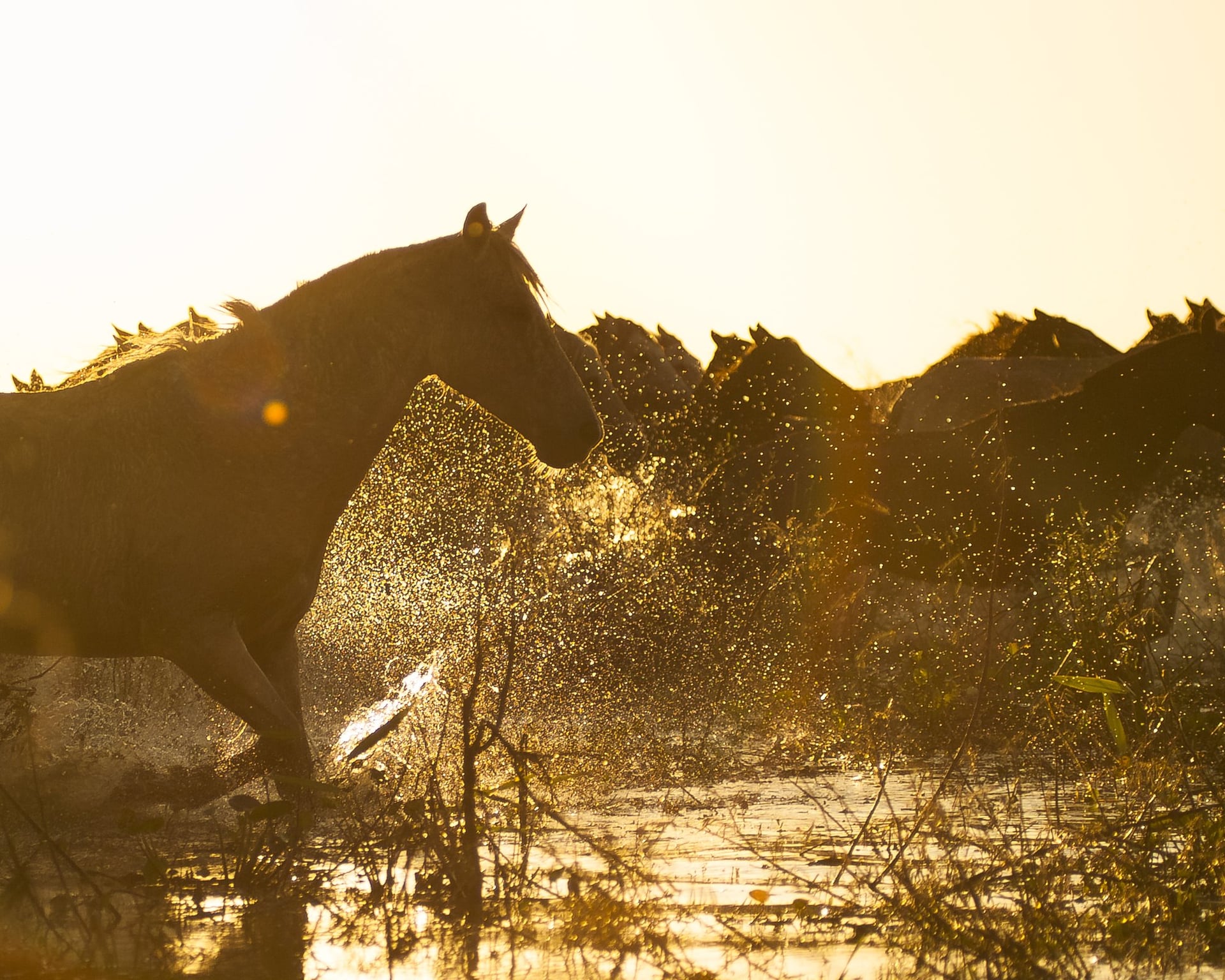
A British family and four days on a working cattle ranch on the Aquidauana River, told in Sally’s own words
Sally Heal, 48, is a teacher from a little village in the middle of England, though these days she spends most of her time training other teachers. Her daughter had been living in Chile for a year and had already visited Brazil with friends.
Seeking warmer weather during the Chilean winter, Sally, her husband, and their two young adult children (ages 20 and 22) picked Brazil. While Costa Rica was considered, higher expenses, complex flight routes, and rainy weather led them elsewhere. This marked their first journey to Brazil and second visit to South America.
The itinerary opened in Rio de Janeiro, which the whole family loved, and Ilha Grande, before a flight west to Campo Grande. The goal was to see wildlife, plant life, and the reality of what Brazil feels like outside of the cities. They almost traveled to the Amazon but ultimately chose the Pantanal, the wetland that spans 210,000 km² across Mato Grosso and Mato Grosso do Sul. Her husband had wanted it from the start.
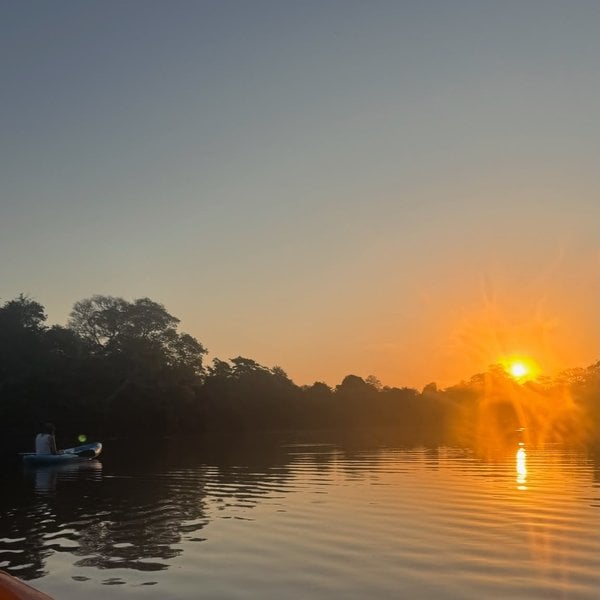
The family spent four days of late August 2026 at Pousada Aguapé, a lodge on the banks of the Aquidauana River, on a Pantanal Tour from Campo Grande organized by PlanetaEXO and led by a local guide. This is her story. Check it out below!
A working cattle ranch, not a five-star hotel
Sally expected the lodge to be very simple. She was half right. “It was basic, but it was way bigger than I thought and way more comfortable,” she said. The shower was better than she had imagined, and the family had space outside the room to dry things off and sit in the shade.
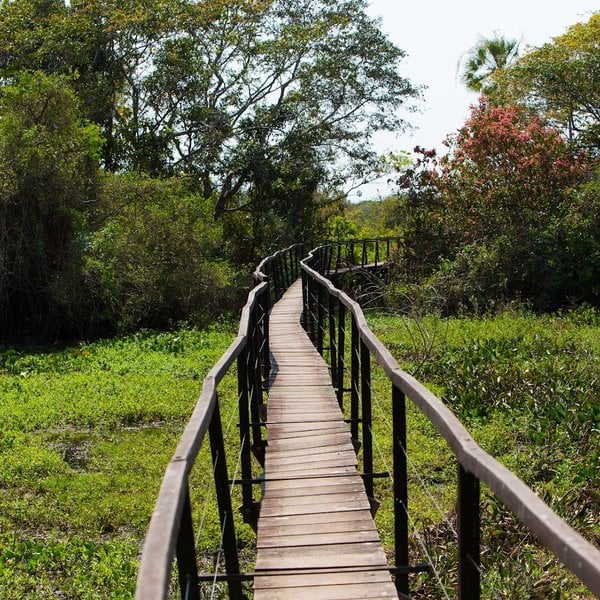
Pousada Aguapé sits on a traditional cattle ranch that has belonged to the same family for more than 150 years, with 15 rooms, a swimming pool, and a hammock area. For Sally, the simplicity was the point. “I don’t want to go to the Pantanal and stay somewhere that feels like a five-star hotel, because I might as well just go to a five-star hotel somewhere else.”
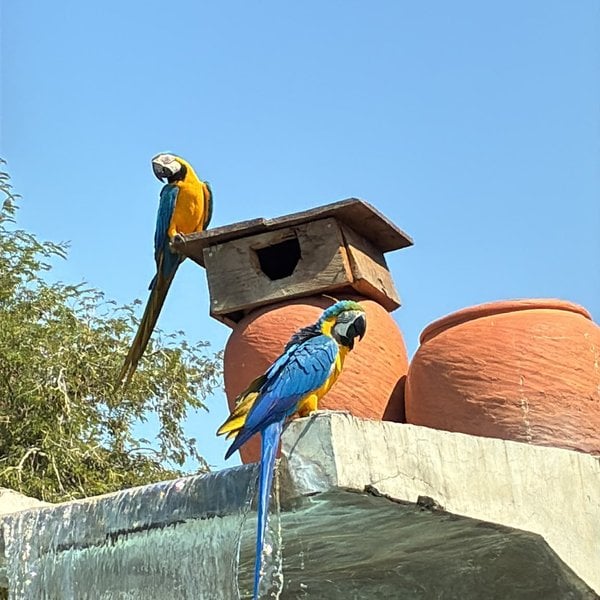
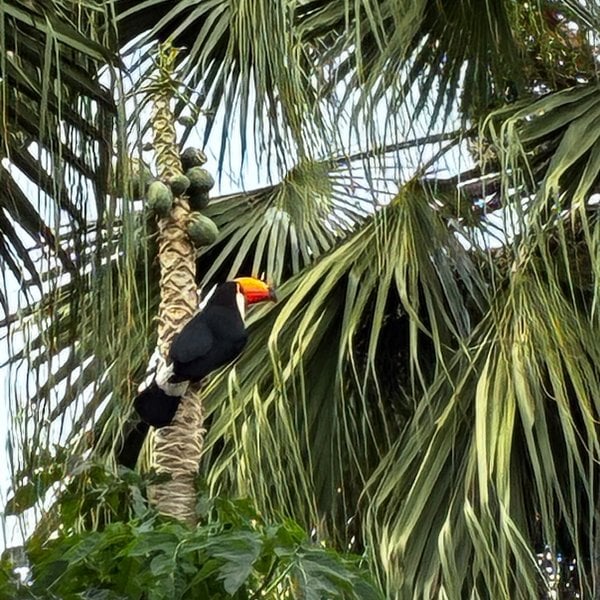
What she wanted was the Pantanal in its purest form. “Having the armadillos walking through the restaurant, the birds landing on the deck whilst you’re eating, the toucans flying over your head, and the macaws nesting next to you whilst you’re in the pool… It was just brilliant.”

The ranch is still a working farm. Sally liked watching the pantaneiros (the local cowboys) “with their own individual saddles and the knives tucked in the back of their trousers,” completely at ease around the horses. It was definitely a different way of life, but it felt honest and almost poetic.
👉 Read more: Where to Stay in the Pantanal?
The guide who sat at another table
Sally’s first memory of Bruno, the family’s guide, has nothing to do with animals. They reached the lodge just in time for lunch, and he went to sit at a different table. “He didn’t assume that we would want to sit with him until we invited him to eat and talk with us. He was very respectful of the fact that it was our holiday, which I thought was lovely.”
Then came the wildlife and his eye for it. The first animal they saw was a greater rhea, the large flightless bird Brazilians call ema. Bruno identified it on the spot, down to the fact that it was a female. Every bird after that came with its species and, often, its age.

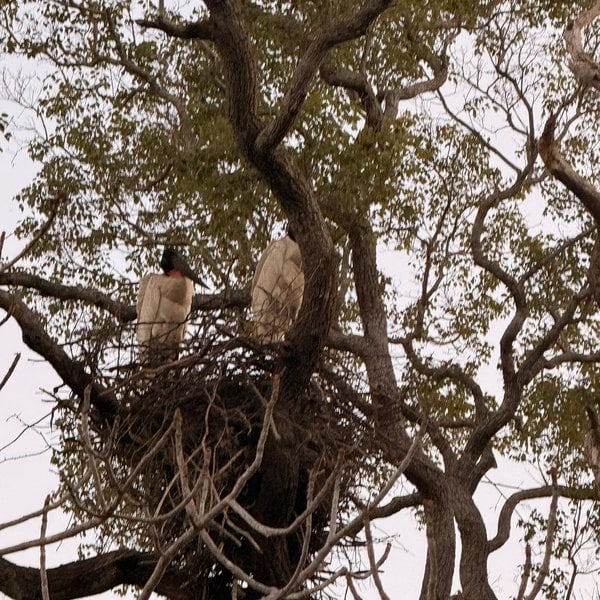
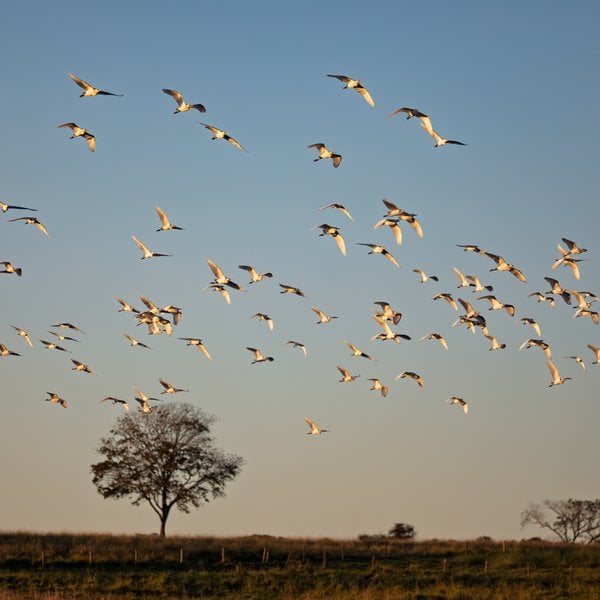
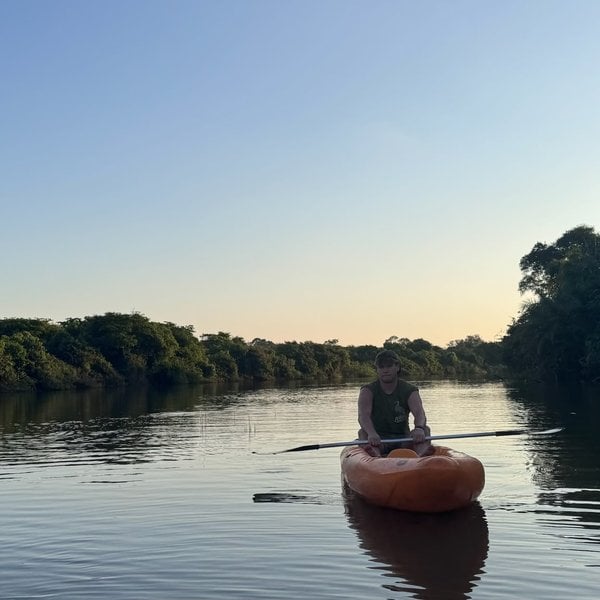
On the river, he never switched off and was always spotting animals. Sally was so impressed she asked him how he could even see these things. His answer was that he knew what he was looking for: just a little bit of movement. She puts a number on it. “We wouldn’t have seen 80% of what we’d seen if it hadn’t been for Bruno pointing them out.”
Bruno and the boat driver worked as a pair, maneuvering so everyone got the best view and the best photo. When they found howler monkeys, Rafael, from the lodge team, tried to imitate their call, which Sally’s son found hilarious. Bruno played along. “It’s an illness he has. We just have to humor him and let him make those sounds,” he joked.
👉 Read more: 15 Amazing Pantanal Animals and Wildlife
Anteaters, toucans, and a very full lizard
The first boat trip began with a test of nerves: a caiman lying right in front of the boat. One member of the family (we promised not to say who) was terrified. The guides turned it into a running joke and into a lesson, since caimans want nothing to do with people. “All you need to do is go ‘shoo, shoo’ and walk towards them, and they run away,” Sally explained.
The sightings piled up from there. Toucans flew around the swimming pool, while armadillos, anteaters, rheas, and capybaras appeared in quantities Sally has never seen before.
One find stayed with her: a rhea egg, already empty, with the lizard that had eaten it still lying next to it. “It was just lying there, full and satiated, with an empty egg next to it,” she recalled. “It’s not nice, but that was kind of cool.”

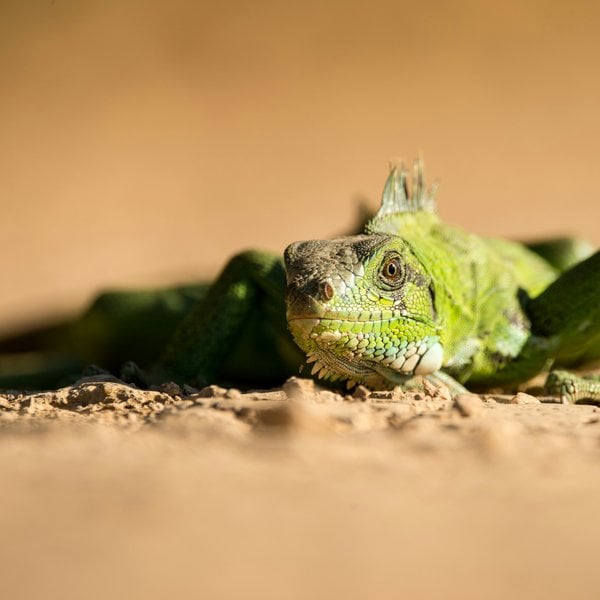
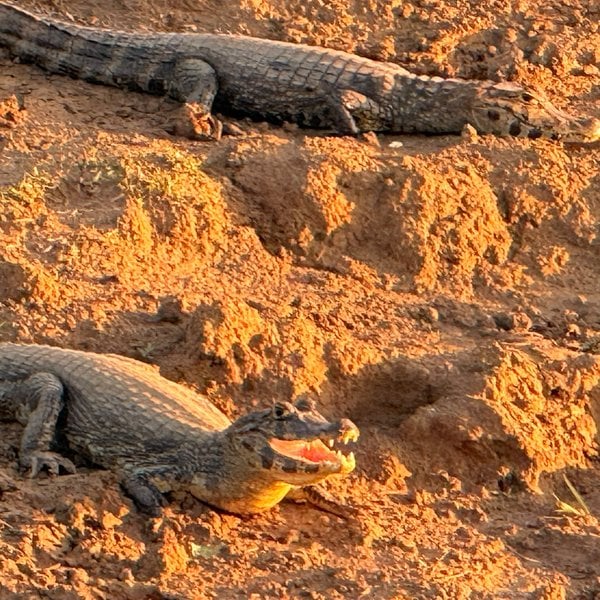
The one animal that never showed up was the jaguar. The consolation came later, from a Hungarian family they befriended on the boat trips. They went on to the Northern Pantanal and sent Sally “the most amazing pictures and videos of jaguars, because they saw loads of them.”
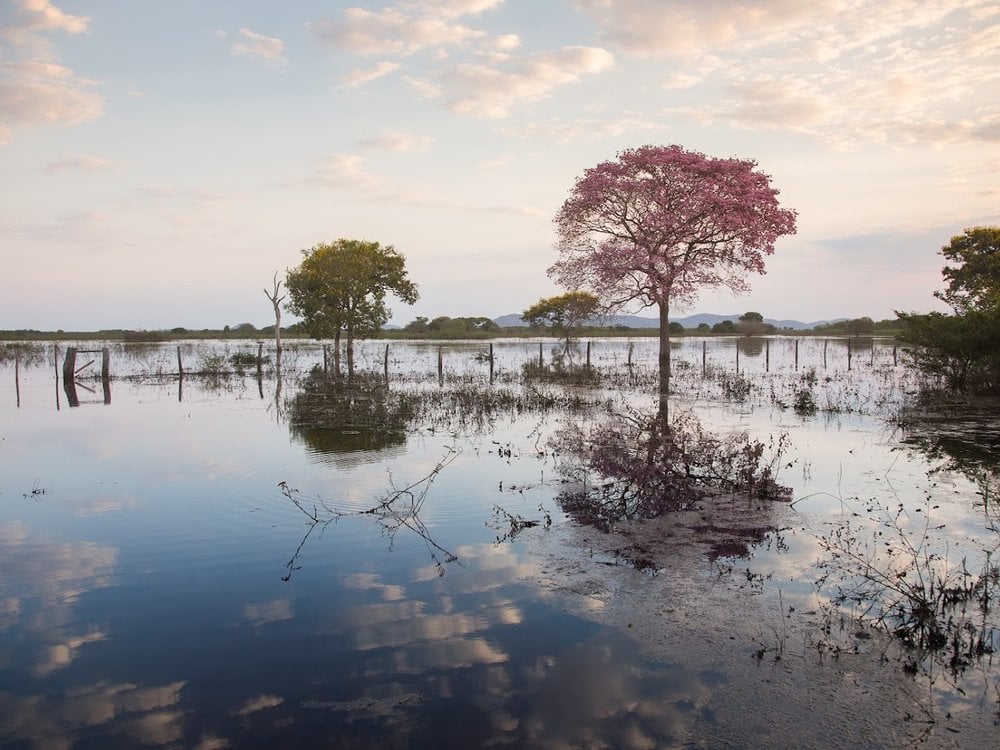
Worth knowing: the best odds of seeing a jaguar are in the Northern Pantanal, while the South shines for ranch-country wildlife like the animals Sally saw. In both regions, the dry season, from July to October, concentrates the animals around the remaining water.
👉 Read more:
The biggest horse for the smallest rider
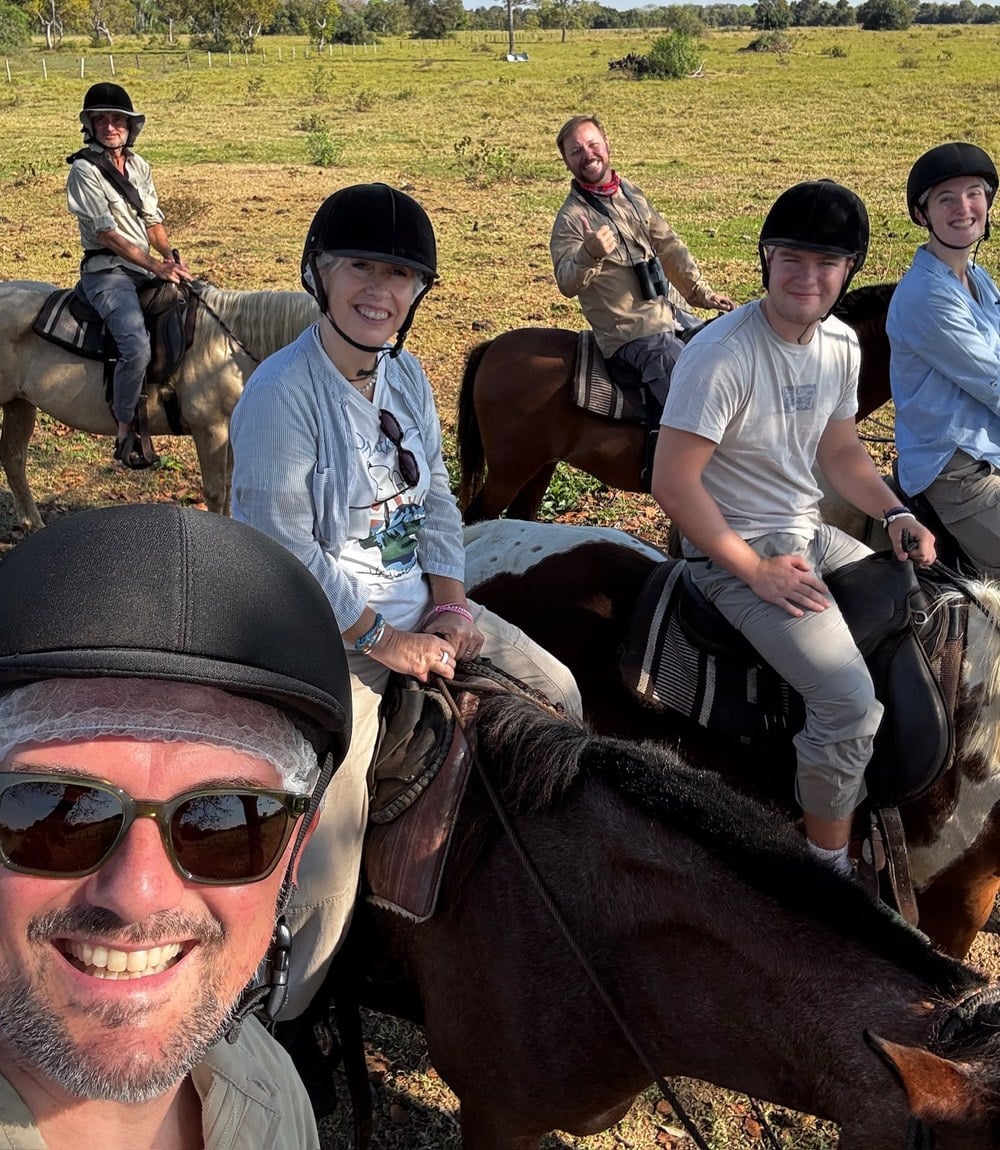
Sally had never been on a horse. “It was quite intimidating. And they gave me the biggest horse, and I’m only 5 foot 2.” She found out the reason later: it was the oldest and calmest horse on the ranch.
The ride turned into the family’s favorite activity. “I think that was our best day,” Sally said. The guide leading it was “brilliant, just very funny,” constantly nudging the horses a little faster for her son and daughter, “just to take them out of their comfort zone and have a little giggle with them.” Then the route went straight through the water.
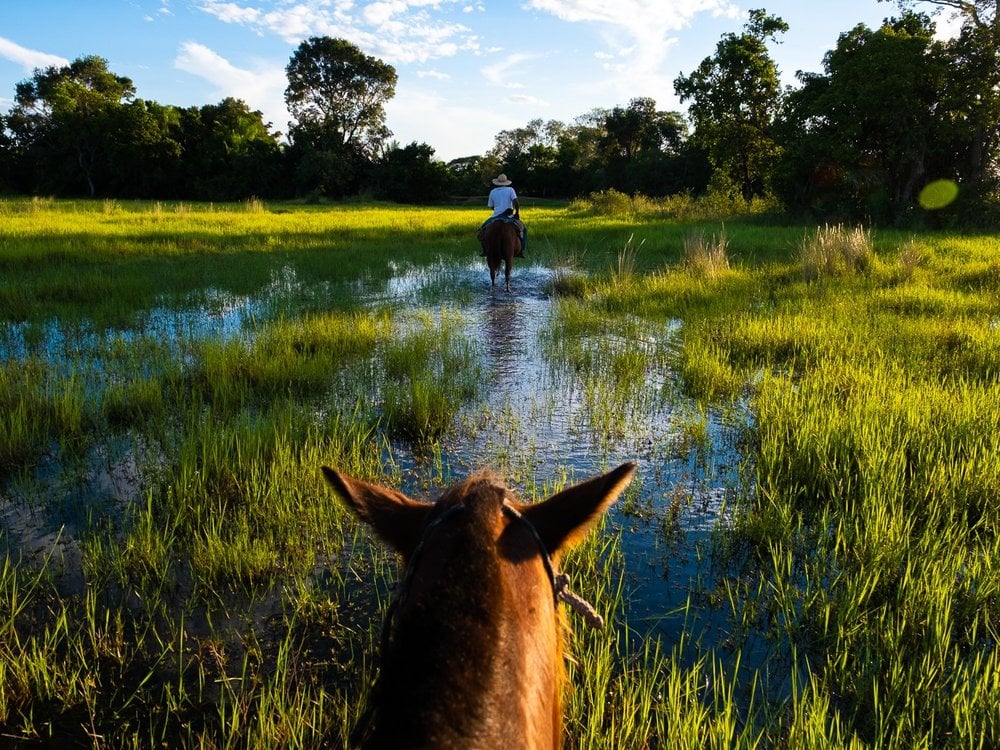
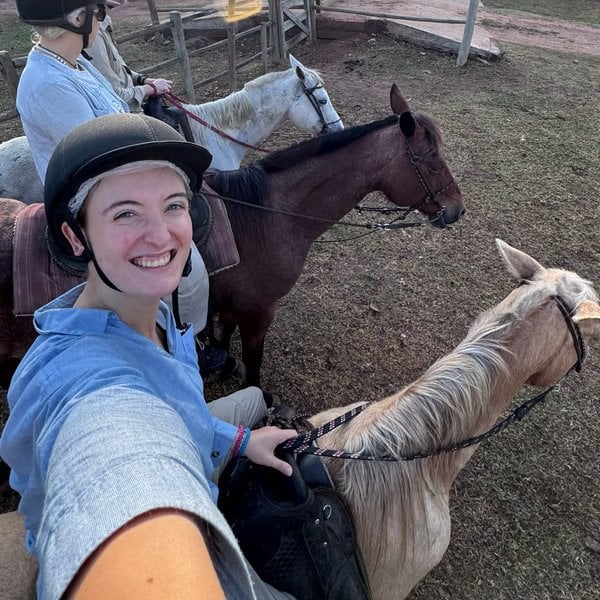
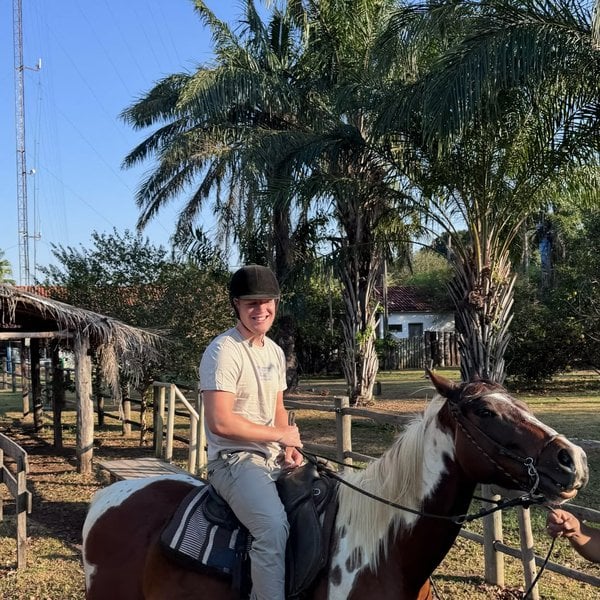
What Sally values most is the view it gave her of the landscape. “You get close to the animals and close to the environment and feel like you were in it rather than in a car. There’s that sense of removal from what you’re experiencing, whereas on a horse it feels very different.”
There was also the sense of achievement: “At the end of it, I feel like I’ve done something I would never have done in the UK,” she reflected.
Caipirinhas, puddings, and six fruit tattoos
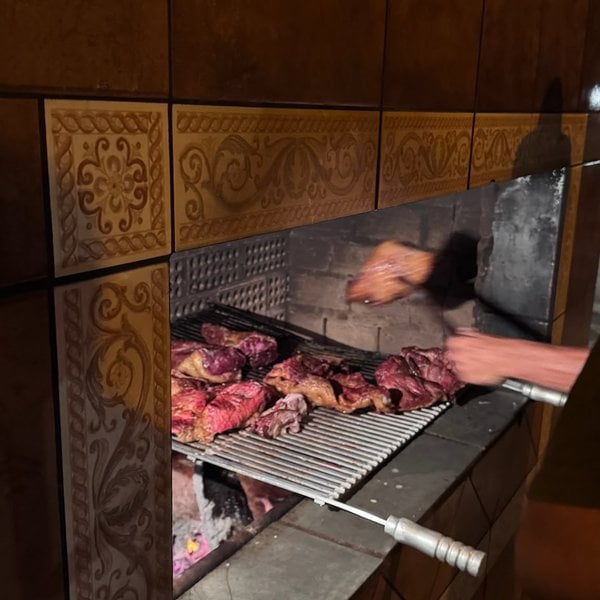
The food at the lodge was, in Sally’s word, “exceptional.” With two hungry grown-up children and “a husband who really loves his meat,” quantity mattered as much as quality, and the lodge delivered both. Dessert was the surprise: cakes and puddings unlike anything you get in the UK.
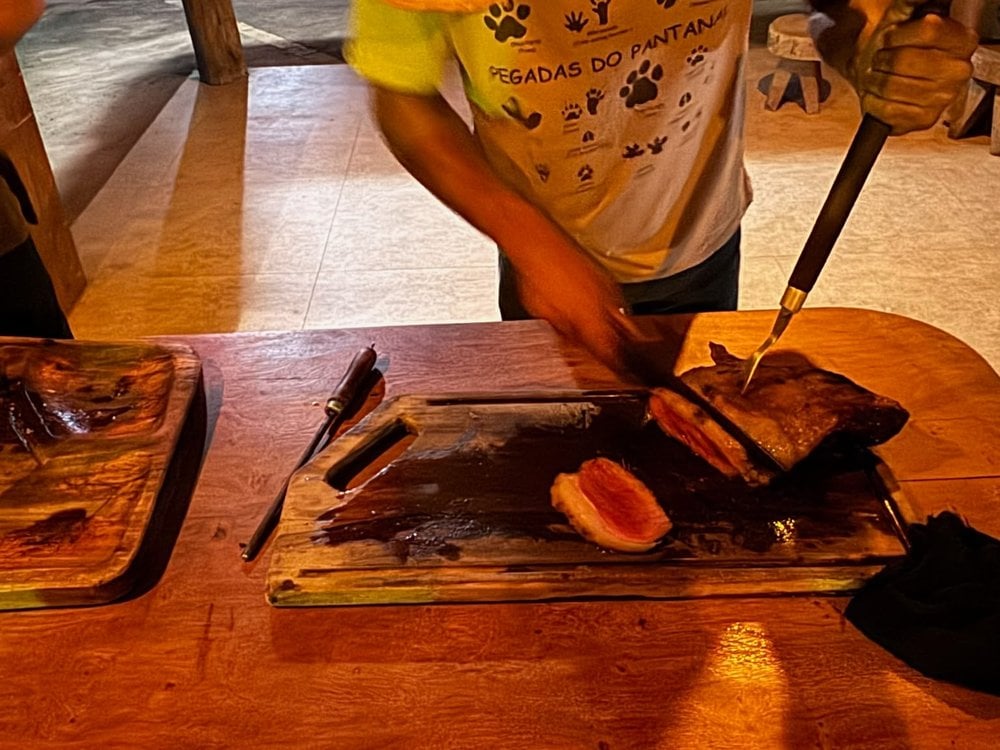
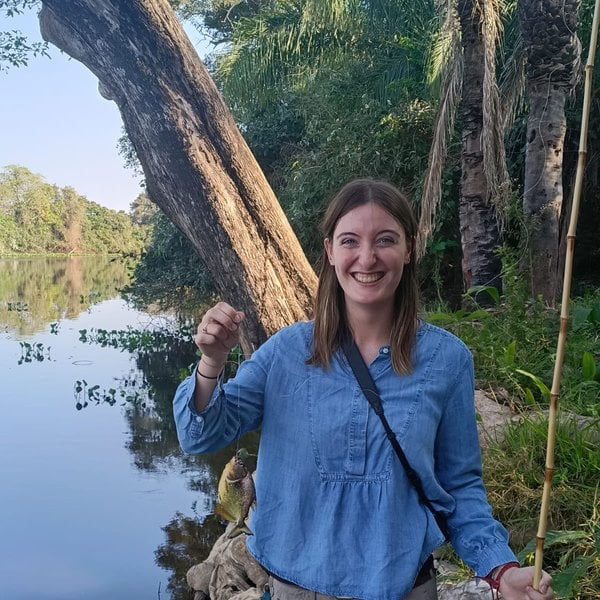
The language barrier never got in the way of a laugh. “They were interested in us; we were interested in them,” she said. “I would describe it as banter, but almost through mime rather than language.”
One night, Rosana, who works at the bar, let Sally take over and make caipirinhas for everyone. “We were dancing and singing, and it was just really funny.” There was a plan behind it, too. “I wanted to learn how to make them so that I could make them when I got home.”
The most unusual souvenir came from Rafael, another guide from the lodge. Noticing a temporary tattoo on his arm, the family asked him about it, prompting him to offer them matching ones. He applied them using a mix of charcoal and fruit juice that gradually washes off over several weeks. Sally got six. By the time we spoke, only one was left on the hand she had barely been washing. The reason for that is the next part of the story.
A broken finger and a team that didn’t panic
The accident happened in the least adventurous moment of the trip. After horse riding, hiking, and boat trips, Sally was playing volleyball with her son in the swimming pool when the ball “just caught me wrong.” Her finger was completely broken.
“Nobody could have foreseen it. It was nobody’s fault,” she noted. “You think about all the things we did, like horse riding and hiking, and any number of things could have happened. And it wasn’t. It was just a moment of relaxation.”
It happened far from everything. “We were quite remote in the Pantanal, in the middle of nowhere, really, and it could have been an absolute disaster.” The nearest hospital was about an hour away down a dirt road. The lodge manager drove Sally there, looked after her, and translated everything. Bruno also helped a great deal at the hospital. “Everyone was really calm as well. Nobody was panicking, which was really nice to see.”
Her children stayed at the lodge and carried on with the activities. “They’d had such a good time when I got back,” she said. “[The staff] made what could have been a nightmare into a very enjoyable day for my children and looked after me really, really well. So I was so grateful.”
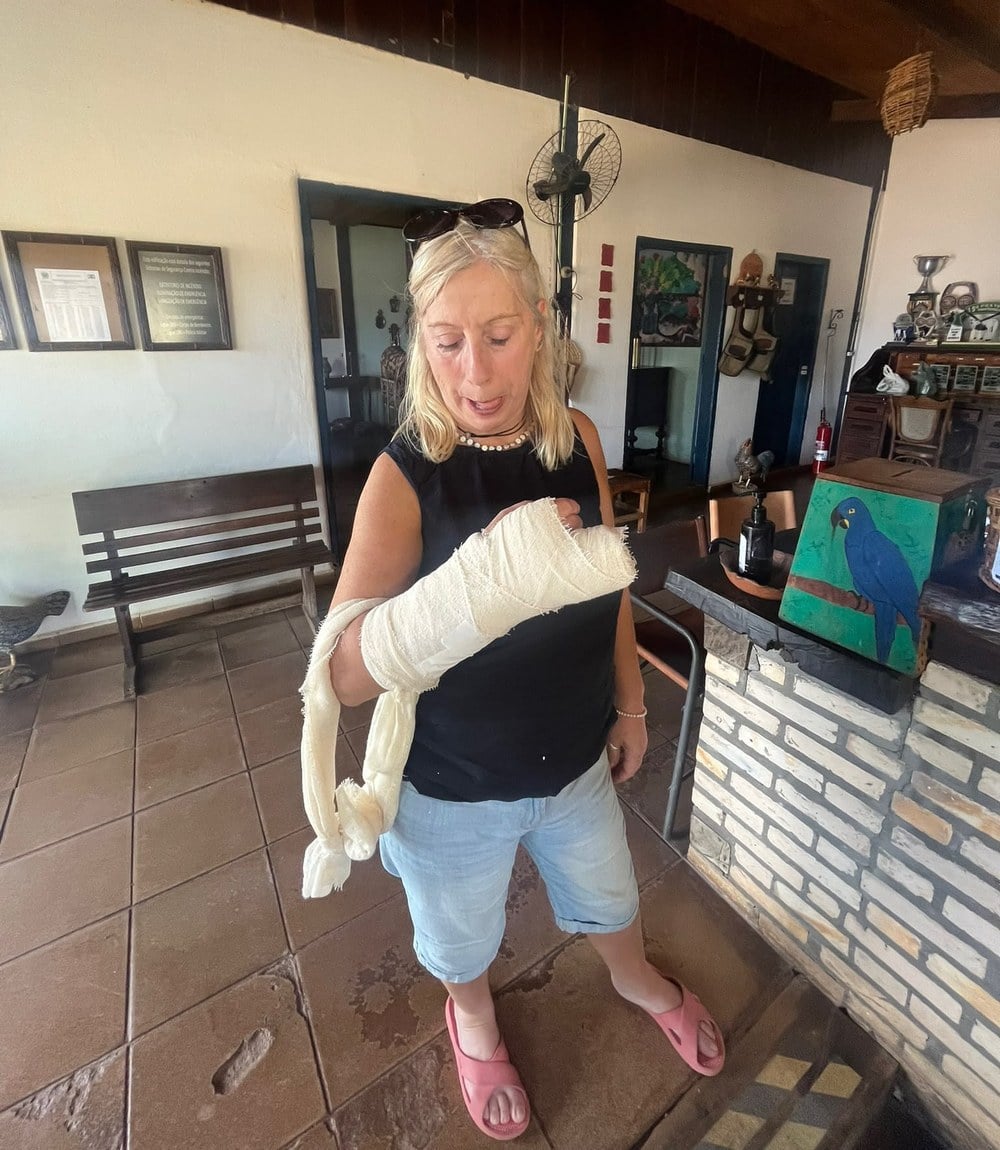
The injury still cut the trip short. The plan had been a couple of days in São Paulo and then Iguazu Falls. Instead, Sally flew home early with her son, while her husband and daughter went back to Chile to go skiing.
Was Brazil safe? Sally’s honest answer
Before the trip, several people warned the family that Rio de Janeiro and São Paulo could be dangerous. That is not what Sally found. “I never felt in danger. I never felt uncomfortable. It was a surprise, but a pleasant one.”
She has a theory about why, and it says as much about the traveler as about the country. “When I travel, I always expect people to be warm and welcoming and kind. And I do think some of that is the way you behave as a guest in someone’s country. The way you behave often dictates how you are received.”
In the Pantanal, the warmth came with a sense of humor. “Even though you can’t speak the language, the staff there was so lovely at the lodge and so funny,” she praised, satisfied with the service her family received.
Sally’s tips for a first trip to the Pantanal
Her first tip was direct: “Go with PlanetaEXO.” Her reasons are practical, and so is the rest of her advice.
Book through someone who can reach the lodges
Booking the Pantanal from a computer in the UK was harder than the family expected. “You don’t really know what you’re looking for, you don’t speak the language, and you don’t really know how to contact the lodges, because I think a lot of them only work through travel companies.” Her daughter found PlanetaEXO online, a cancellation freed up a quadruple room, and the family booked only three to four weeks before arriving.
From there, communication did the rest. “I knew exactly what I was doing and exactly what to expect. I even knew what clothes to take.” When she mixed up a luggage rule she had read elsewhere (soft bags only, 15 kg maximum) and started to panic, one message from the PlanetaEXO team put her straight right away.
Travel with a guide who speaks your language
“He brought the Pantanal to life,” Sally said of Bruno. “I don’t think we would have got anywhere near as much out of it if we hadn’t had Bruno with us, and his English was excellent, which really helped.”
On this tour, a private English-speaking guide is included, on top of the Portuguese-speaking local guide provided by the lodge.
Get on a horse
Even if you have never ridden. Sally and her husband were beginners, and it was still their best day.
The ranch guides carefully ease beginners into riding and set a comfortable tempo; thanks to the horses’ gentle pace, guests can get remarkably close to wildlife.
Take it slow
Her last tip is the one she would give any first-timer. “Take your time and take it slow. Just let the nature wash over you rather than looking for stuff,” she recommended.
👉 Read more: 10 Pantanal Travel Tips for an Unforgettable Trip
Exciting, comfortable, funny
We asked Sally to describe the Pantanal in three words. She humorously set one condition first: “Without mentioning my broken finger.”
Exciting, “because it felt exciting while we were there.” Comfortable, “and I don’t just mean the beds were comfy. I mean, feeling instantly at home.” And funny. “We laughed a lot, with the people and with my family. It was good fun.”

Next: jaguars, Fernando de Noronha, and the falls she missed
Brazil left the family with a list. Her husband wants the Northern Pantanal and its jaguars. Sally wants Fernando de Noronha, Lençóis Maranhenses and Iguazu Falls, since she had to cut her trip short due to her injury.
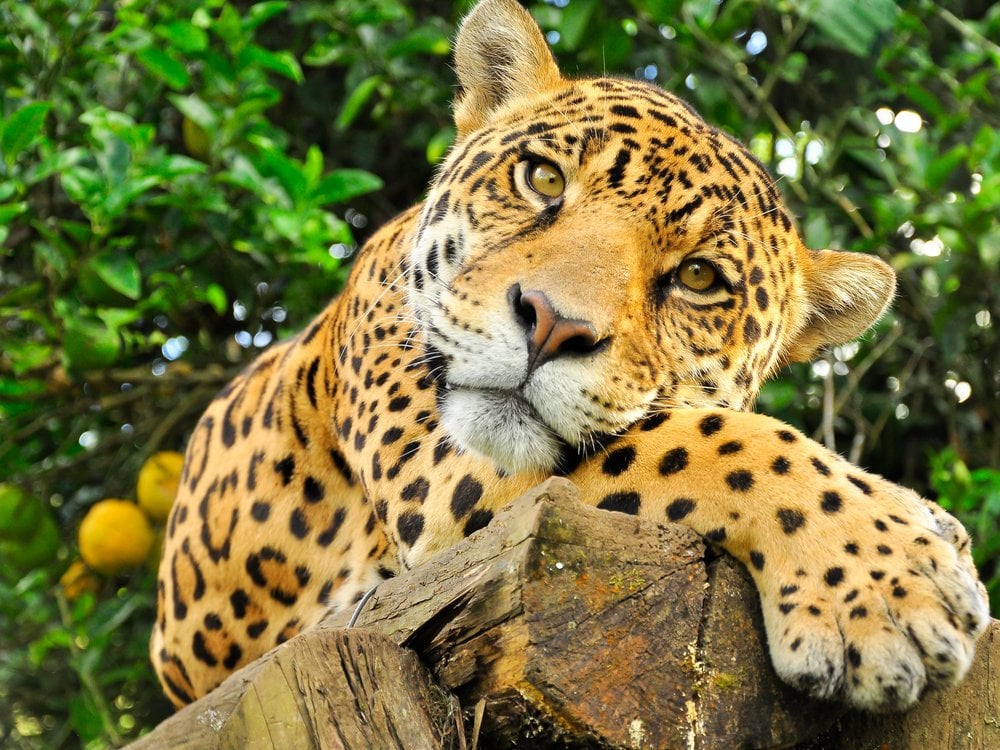
The family visited Rio and Ilha Grande, but the weather wasn’t the best, so they want a second round. “I’d love to see it in the sunshine,” she commented.
👉 Read more: Where is the Best Place to See Jaguars in the Pantanal?
Visiting the South Pantanal with PlanetaEXO
Now that you have seen how the Aquidauana River area welcomes visitors through Sally and her family’s experience, you know what the South Pantanal has in store. So what’s left to do is see it for yourself!
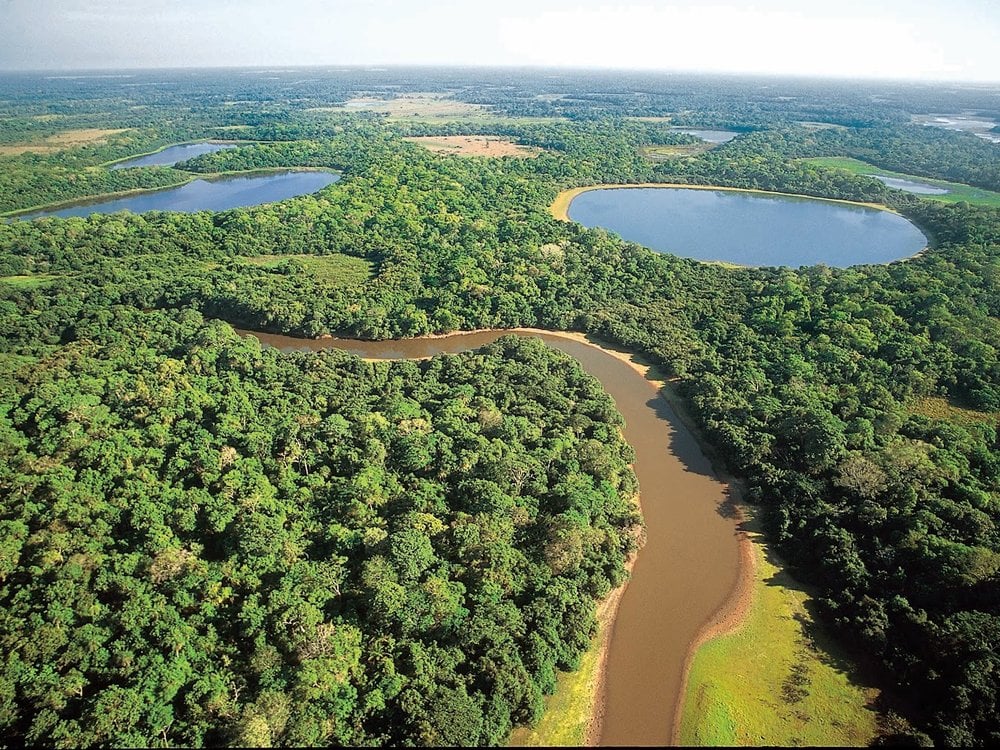
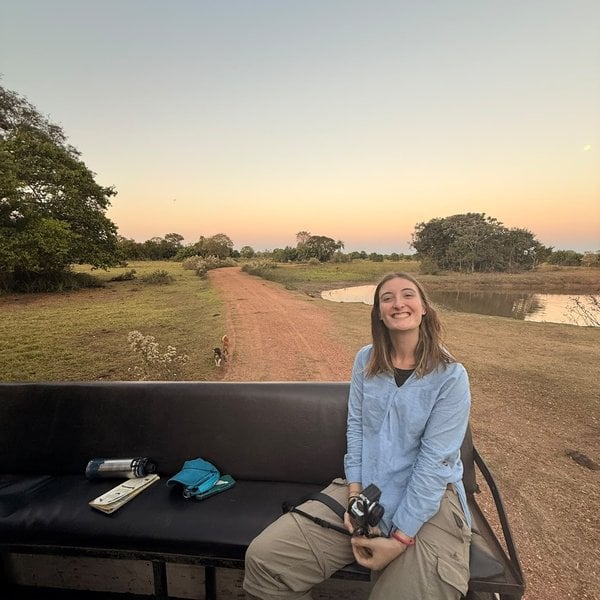
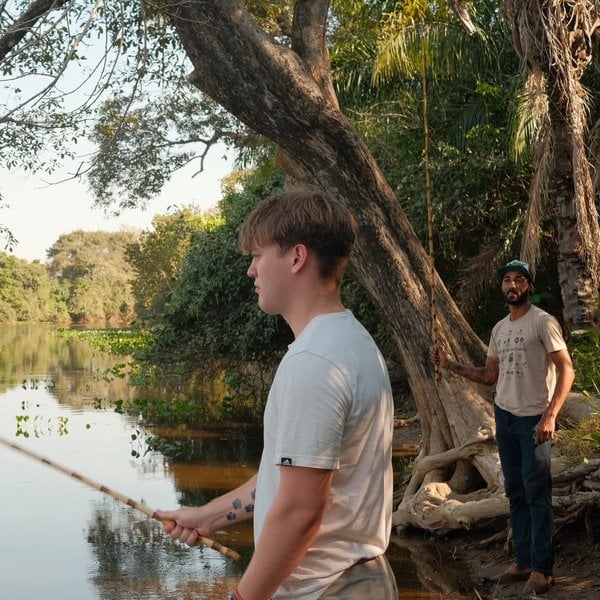
PlanetaEXO is an ecotourism platform specializing in Southern Pantanal tours. Working alongside experienced local guides and operators, we handle the logistics (the transfer from Campo Grande, the lodge, the meals, and the activity program), so your family can focus on the experience itself. Contact us now!
Keep reading
September 15, 2026
Five Jaguars in One Day: Michael’s Family Pantanal Safari in Brazil
A Swiss doctor and his family on a 4-day jaguar safari in the Pantanal, Brazil: five jaguars in a day, a private guide, and honest advice.
September 14, 2026
Filming Lençóis Maranhenses for Korean TV: Jihee Yeon’s Brazil Story
Korean producer Jihee Yeon crossed Lençóis Maranhenses on foot to film for KBS: the dunes, the hammocks, the children, safety in Brazil and her tips.

September 11, 2026
Three Nights in the South Pantanal: Sandy’s Wildlife Story in Brazil
Sandy knows Brazil well but had never seen the Pantanal. Three nights on the Miranda River with her son: wildlife, a talented guide, and honest advice.